Concept 1: What is Electronic Design Automation (EDA)?
The Problem It Solves
Modern chips (CPUs, GPUs) are extraordinarily complex — containing billions of transistors. No human team could manually verify or design these by hand.
What EDA Is
EDA is a category of software tools that automate the process of designing, simulating, verifying, and implementing semiconductor chips.
Think of it like this:
- An architect uses CAD software to design a building
- A chip engineer uses EDA software to design a processor
Key EDA Stages Mentioned in the Article
| Stage | What It Does |
|---|---|
| Logic Simulation | Tests how the chip behaves before it's built |
| Formal Verification | Mathematically proves the design is correct |
| Regression Testing | Runs thousands of repeated tests across many scenarios |
| Digital Implementation | Converts the design into a physical, manufacturable layout |
Concept 2: What is RTL (Register-Transfer Level)?
The Starting Point of Chip Design
Before a chip is physically manufactured, engineers must describe its behavior in code.
RTL Explained Simply
RTL is a hardware description language abstraction that defines how data moves between registers (storage units) and how logic operations transform that data at each clock cycle.
Think of it like sheet music:
- The sheet music describes the song (RTL describes the chip)
- A musician performs it (the fabrication process builds it)
The RTL-to-Silicon Journey
Architecture Design
       ↓
   RTL Code
       ↓
Logic Simulation → Formal Verification → Regression Testing
       ↓
Digital Implementation
       ↓
   Manufacturable Silicon (Tapeout)
Tapeout = the final step where the design is sent to the factory for manufacturing
Concept 3: Why CPU Performance Matters for EDA
A Common Misconception
You might assume GPUs (being powerful parallel processors) handle everything in modern computing. The article corrects this.
The Reality
Some EDA workloads are inherently sequential — they depend on fast individual cores, not thousands of parallel ones.
| Workload Type | Best Suited For |
|---|---|
| Parallel, repetitive math (e.g., AI training) | GPU |
| Sequential logic, formal proofs, simulation | CPU |
Why This Matters
- Formal verification must follow logical chains of reasoning — one step depends on the previous
- Logic simulation tracks signal states through time — order matters
- These tasks benefit from fast single-core performance and low memory latency, which are CPU strengths
Concept 4: NVIDIA's Vera CPU Architecture
What Vera Is
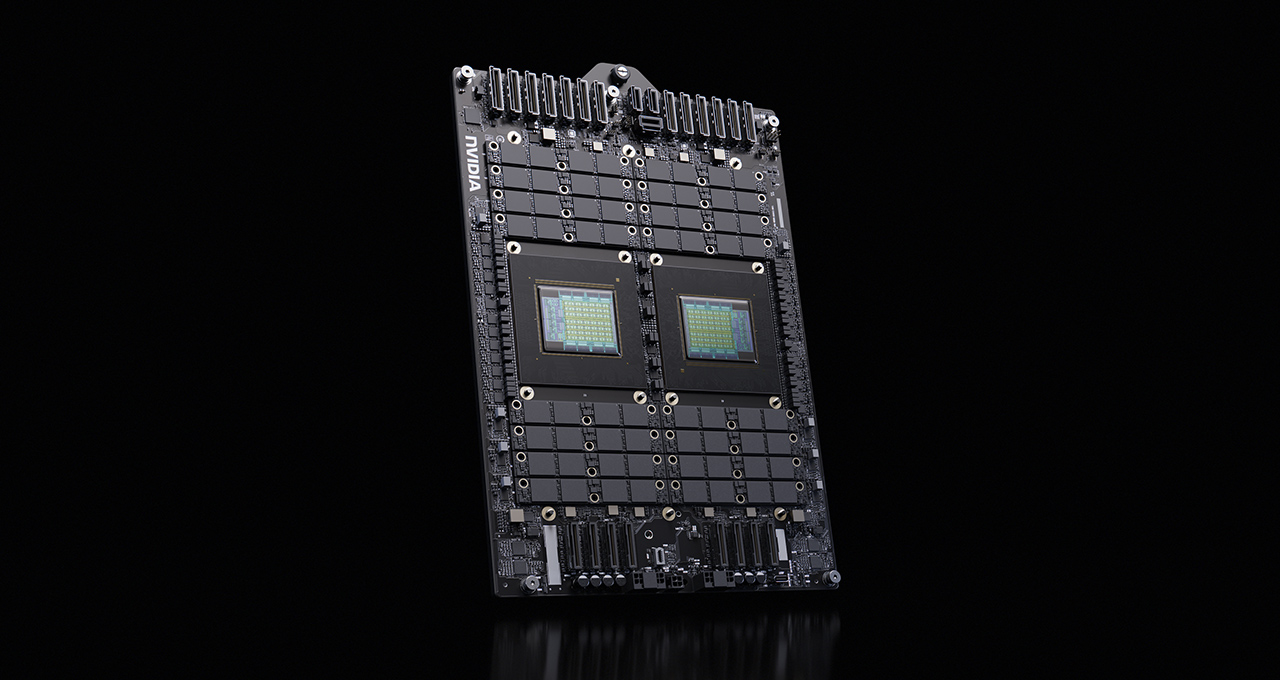
Vera is NVIDIA's custom-built CPU designed for high-performance engineering workloads.
Key Components Broken Down
88 Custom NVIDIA Olympus CPU Cores
- More cores = more tasks running simultaneously
- "Custom" means NVIDIA designed these specifically, rather than using off-the-shelf designs
LPDDR5X Memory Subsystem
- LPDDR5X = Low Power Double Data Rate 5X memory
- Provides high bandwidth (moves large amounts of data quickly) while remaining energy efficient
2nd Generation NVIDIA Scalable Coherent Fabric
- A communication network connecting cores and memory
- "Coherent" means all cores see a consistent view of memory — critical for avoiding errors in complex simulations
Why These Features Matter for EDA
Fast Cores → Shorter individual verification runs
High Memory Bandwidth → Handles large design databases
Low Latency → Quick response for latency-sensitive jobs
High Throughput → More design alternatives tested simultaneously
Concept 5: The Feedback Loop Strategy
The Core Business/Engineering Concept
NVIDIA is using its own CPUs to design its next CPUs and GPUs — creating a self-reinforcing cycle.
How the Loop Works
Vera CPU accelerates EDA workflows
           ↓
Engineers validate chip designs faster
           ↓
Better chips (including better CPUs) are produced sooner
           ↓
Next-generation CPU (Rosa/Rigel) is even faster
           ↓
That CPU accelerates EDA workflows even more
           ↓
         (repeat)
Why This Strategy Is Powerful
Each generation of hardware directly funds and accelerates the development of the next generation — compressing development timelines and compounding performance gains over time.
This is sometimes called "eating your own cooking" or dogfooding in the tech industry — using your own product to build your next product.
Concept 6: The Broader Principle — Right Tool for the Right Job
The Unifying Lesson of the Article
Modern computing is not about one architecture dominating everything — it's about matching the compute architecture to the workload.
NVIDIA's Layered Approach
| Tool | Best Used For |
|---|---|
| GPU | Parallel algorithms, AI-assisted design steps |
| AI/ML | Pattern recognition, bug prediction (e.g., Cadence Jasper) |
| CPU (Vera) | Sequential simulation, formal verification, implementation |
The Takeaway
No single processor type is universally superior. The fastest overall system is one where:
- GPUs handle what GPUs do best
- CPUs handle what CPUs do best
- AI accelerates what can be learned from data
This heterogeneous computing philosophy is increasingly central to how modern engineering infrastructure is designed.
Summary Table
| Concept | Key Idea |
|---|---|
| EDA | Software tools that automate chip design and verification |
| RTL | Code-level description of chip behavior before manufacturing |
| CPU vs GPU for EDA | Sequential workloads need fast CPUs, not just parallel GPUs |
| Vera Architecture | Custom cores + high-bandwidth memory + coherent fabric = EDA performance |
| Feedback Loop | Using current chips to build better chips compounds progress |
| Heterogeneous Computing | Match the architecture to the workload for maximum efficiency |