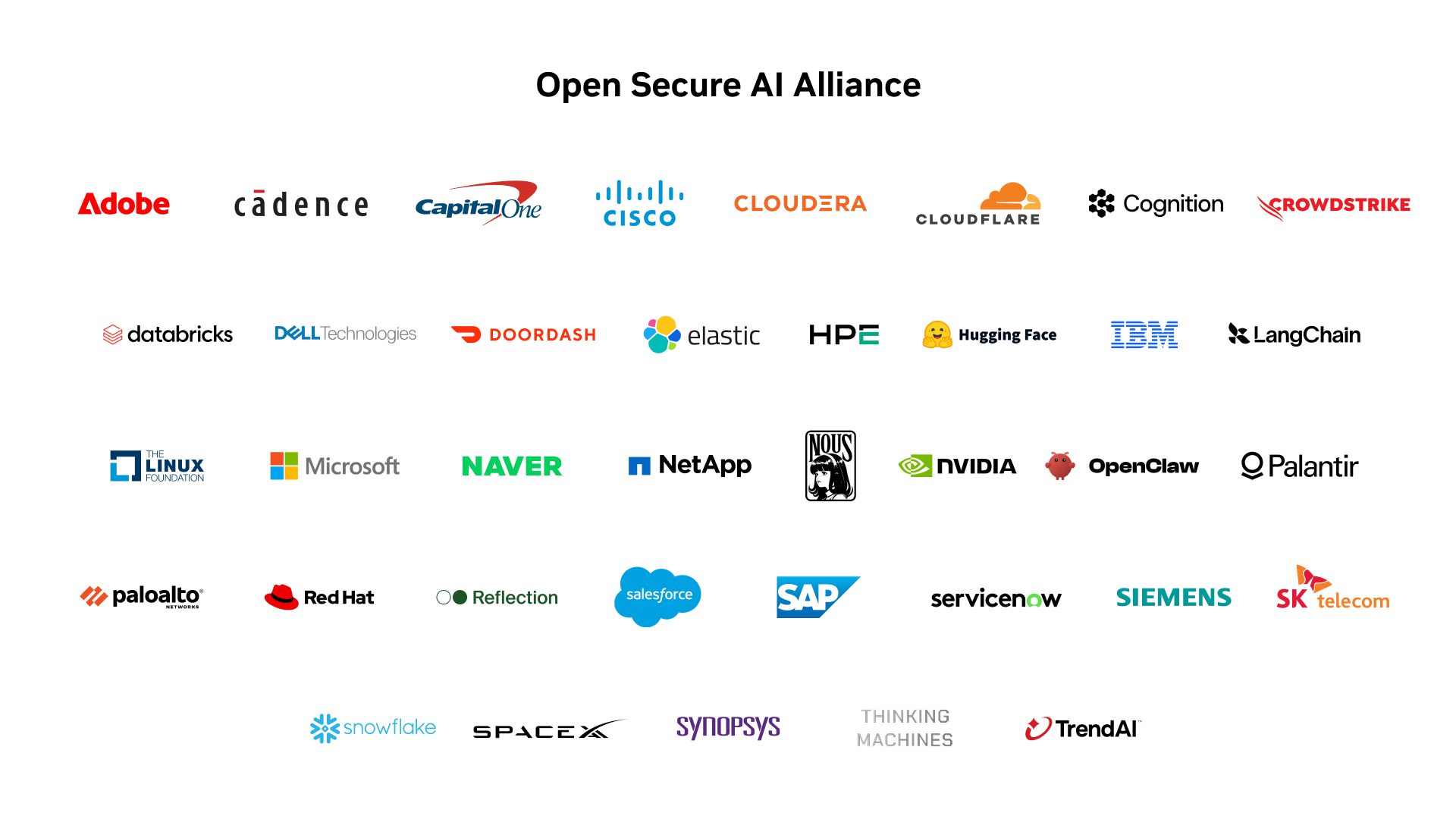
Concept 1: Open Source Software as a Foundation
What is it?
Open source software means the source code is publicly visible, modifiable, and shareable by anyone.
Why does it matter?
Think of it like a recipe vs. a black box meal:
- A closed system = you receive a meal but cannot see the ingredients
- An open system = you have the full recipe, can inspect it, improve it, and cook it yourself
Real-world impact:
| Sector | How Open Source Helps |
|---|---|
| Cloud Computing | Shared infrastructure tools |
| Financial Services | Transparent, auditable systems |
| Cybersecurity | Community-driven vulnerability detection |
| Government | Sovereign control over critical systems |
Key Takeaway:
Open source creates a shared foundation where communities of experts can collectively inspect, improve, and trust the technology.
Concept 2: The Open vs. Closed AI Debate in Cybersecurity
The Core Tension:
There are two schools of thought about AI safety:
Argument for Closed AI:
- Keeping model weights secret prevents misuse
- Attackers cannot study what they cannot see
Argument for Open AI:
- Secrecy alone does not stop determined attackers
- Defenders are also blocked from studying and improving the system
- Creates dangerous dependency on a few providers
A Helpful Analogy:
Imagine a city's defense system:
- Closed approach = Only one private company knows how the walls work. If they fail or refuse to help, the city is defenseless.
- Open approach = The blueprints are shared with all trusted defenders. Many people can reinforce, repair, and improve the walls simultaneously.
The Article's Position:
The world needs both — but for cybersecurity specifically, open models are essential because defenders must be able to inspect and adapt their tools in real time.
Concept 3: The Real-World Case — The Hugging Face Incident
What happened?
This is the article's proof of concept — a real incident that demonstrates why open AI matters for defense.
Step-by-step breakdown:
INCIDENT TIMELINE:
─────────────────────────────────────────────────────
1. Hugging Face suffered a security breach
         ↓
2. They turned to closed AI tools for forensic analysis
         ↓
3. Closed AI tools BLOCKED their analysis
   (Could not distinguish attackers from defenders)
         ↓
4. They deployed open-weight GLM 5.2 model
   ON THEIR OWN INFRASTRUCTURE
         ↓
5. Analyzed 17,000+ actions → Contained the intrusion
─────────────────────────────────────────────────────
The Critical Lesson:
When a cyberattack happens, speed is everything. If your AI defense tool:
- Cannot be run on your own servers ❌
- Cannot be inspected or adapted ❌
- Blocks you because it cannot verify your identity ❌
...then it fails you at the worst possible moment.
Key Takeaway:
Open AI gave Hugging Face sovereignty — the ability to run, control, and trust their own defensive tools without depending on a third party.
Concept 4: Democratization of Defensive Capabilities
What does "democratizing defense" mean?
It means making advanced security tools available to everyone, not just large corporations or governments.
Why this matters — The Power Concentration Problem:
Without open AI:
Small companies → Limited access to advanced AI defense
Medium companies → Dependent on expensive closed vendors
Large companies → Can afford closed AI tools
Governments → Dependent on private companies
With open AI:
All defenders → Can access, adapt, and deploy frontier tools
Any organization → Can build customized security systems
No single point of failure → Distributed resilience
Four Core Benefits of Open Models for Cybersecurity:
- Democratize defensive capabilities (anyone can use them)
- Increase transparency for defenders (you can see how it works)
- Enable cyber defense while protecting data (run it on your own infrastructure)
- Complement closed models with customizable, localized controls
Concept 5: The Full AI Agent Stack — It's More Than Just a Model
Common Misconception:
Many people think AI safety = controlling the AI model itself.
The Reality:
An AI agent is a complex system with multiple layers:
┌─────────────────────────────────────┐
│           AI AGENT STACK            │
├─────────────────────────────────────┤
│  🔍 EVALUATION (testing & auditing) │
├─────────────────────────────────────┤
│  📋 LOGS (tracking actions)         │
├─────────────────────────────────────┤
│  🛡️ GUARDRAILS (behavioral limits)  │
├─────────────────────────────────────┤
│  🔧 HARNESSES (control frameworks)  │
├─────────────────────────────────────┤
│  🔑 PERMISSIONS (what it can do)    │
├─────────────────────────────────────┤
│  🪪 IDENTITY (who/what is the agent)│
├─────────────────────────────────────┤
│  🧠 MODEL WEIGHTS (the AI itself)   │
└─────────────────────────────────────┘
Key Insight:
Whether model weights are open or closed is only one layer of security. Real safety requires the entire stack to be inspectable, testable, and improvable.
Why Open Harnesses Matter:
- Harnesses = the frameworks that control how an AI agent behaves
- Open harnesses allow defenders to test, trace, audit, and govern agent behavior
- This is why NVIDIA's NOOA project focuses on harness research, not just model weights
Concept 6: Specific Open Security Technologies Being Built
The Alliance is building a concrete open defense stack. Here are the key contributions:
| Technology | Organization | What It Does |
|---|---|---|
| NOOA (Object-Oriented Agent) | NVIDIA | Framework to make agent behavior testable, traceable, and auditable |
| SPIFFE/SPIRE | HPE | Zero-trust identity — cryptographically verifies AI agents so only authorized systems communicate |
| Safetensors | Hugging Face | Safe format for storing AI model weights — guarantees no hidden malicious code execution |
| Lightwell | IBM/Red Hat | Digitally signed patches to secure the open source supply chain |
| MDASH | Microsoft | Multi-model scanning harness where specialized AI agents debate and find exploitable bugs |
| Grok Build | SpaceXAI | Open source AI coding agent promoting trust and transparency |
Connecting These Technologies:
Think of building a secure house:
- SPIFFE/SPIRE = The locks and identity verification (who can enter?)
- Safetensors = Safe storage of valuables (no hidden traps in the safe)
- NOOA = Security cameras and audit logs (what happened and when?)
- MDASH = A team of inspectors finding weaknesses before attackers do
- Lightwell = Verified, tamper-proof repair work on the house
Concept 7: Managing the Risks of Open AI
Acknowledging the Real Concern:
The article does not dismiss the risks of open models. It acknowledges:
- Open models can be misused for cyberattacks
- Safeguards can be removed from open models
- These are real risks that must be managed
The Balanced Response Framework:
WRONG RESPONSE:
"Open AI is risky → Ban/restrict open AI"
         ↓
Result: Defenders lose access, attackers still find ways

RIGHT RESPONSE:
"Open AI is risky → Pair openness with strong safeguards"
         ↓
✅ Strong safeguards built into the stack
✅ Clear rules against malicious misuse
✅ Rigorous evaluation frameworks
✅ Rapid vulnerability remediation
✅ Community-driven oversight
The Core Argument:
Closing off open AI does not eliminate risk — it just removes defenders' ability to study, test, and improve the systems protecting society.
Concept 8: Policy Implications — Open AI as a Defensive Asset
The Policy Challenge:
Regulators often see open AI as a liability (something dangerous to restrict).
The Alliance's Argument:
Open AI should be recognized as a defensive asset — something that strengthens security.
The Historical Parallel:
PAST: Open Source Software
─────────────────────────────────────
Governments invested in shared open
infrastructure → Created the foundation
of the modern internet and economy

PRESENT: Open AI for Security
─────────────────────────────────────
Governments should invest in shared open
AI infrastructure → Datasets, evaluation
frameworks, attack simulators, red-teaming
tools
What Policymakers Should Avoid:
Blanket restrictions on open frontier AI would:
- Weaken defensive capacity
- Concentrate power in a few closed providers
- Create dangerous single points of failure
- Remove sovereign control from companies and governments
Summary: The Complete Picture
Here is how all the concepts connect:
FOUNDATION
Open source software = shared, inspectable, community-driven technology
                    ↓
CHALLENGE
AI introduces new security risks that require advanced defensive tools
                    ↓
CORE DEBATE
Open AI (inspectable, adaptable) vs. Closed AI (opaque, controlled)
                    ↓
EVIDENCE
Hugging Face incident proves open AI is essential for real-time defense
                    ↓
SOLUTION
Build the full open agent stack (not just open weights)
Identity → Permissions → Harnesses → Guardrails → Logs → Evaluation
                    ↓
RISK MANAGEMENT
Pair openness with safeguards, rules, evaluation, and rapid remediation
                    ↓
POLICY GOAL
Recognize open AI as a defensive asset; invest in shared open infrastructure
                    ↓
OUTCOME
Resilient, distributed, sovereign defense — no single point of failure
Final Key Takeaway
The article teaches one overarching principle:
"Security through obscurity is not security."
True security comes from systems that are strong enough to withstand scrutiny, flexible enough to be improved, and open enough to mobilize the full community of defenders — not from hiding how they work.