Step-by-Step Teaching Guide
Step 1: Setting the Context — What is Generative AI?
Before focusing on voice, understand the broader landscape:
Generative AI refers to systems that can create new content — text, images, video, or audio — using deep learning models
Key Examples You May Know:
| Tool | What It Generates |
|---|---|
| ChatGPT | Text |
| DALL-E / Midjourney | Images |
| Stable Diffusion | Images |
| Voice AI (ElevenLabs) | Human-like speech |
💡 Key Insight:
Despite massive attention on text and image AI, voice AI remains significantly underexplored — making it a major emerging opportunity
Step 2: Understanding the Core Technology
What is Text-to-Speech (TTS)?
- Converts written text → spoken audio
- Traditional TTS sounded robotic
- Modern deep learning-powered TTS sounds nearly indistinguishable from humans
What is Voice Cloning?
- Analyzes a real person's voice
- Recreates it digitally
- Allows generating new speech in that person's voice
🔑 The Critical Technical Concept: Speaker Embeddings
Real Voice → Analysis → Speaker Embedding → Synthetic Speech
Speaker Embeddings explained simply:
- Think of them as a unique fingerprint for a voice
- Stored as a vector (a list of numbers representing voice characteristics)
- Captures qualities like:
- Tone
- Pitch
- Accent
- Speaking rhythm
Step 3: How Voice Generation Works
The Innovation — Designing NEW Voices
Instead of cloning existing voices, generative models can sample from the distribution of speaker embeddings to create entirely new voices that never existed
Think of it like this:
Traditional: Copy existing voice → Limited options
Generative:  Sample from voice "space" → Infinite possibilities
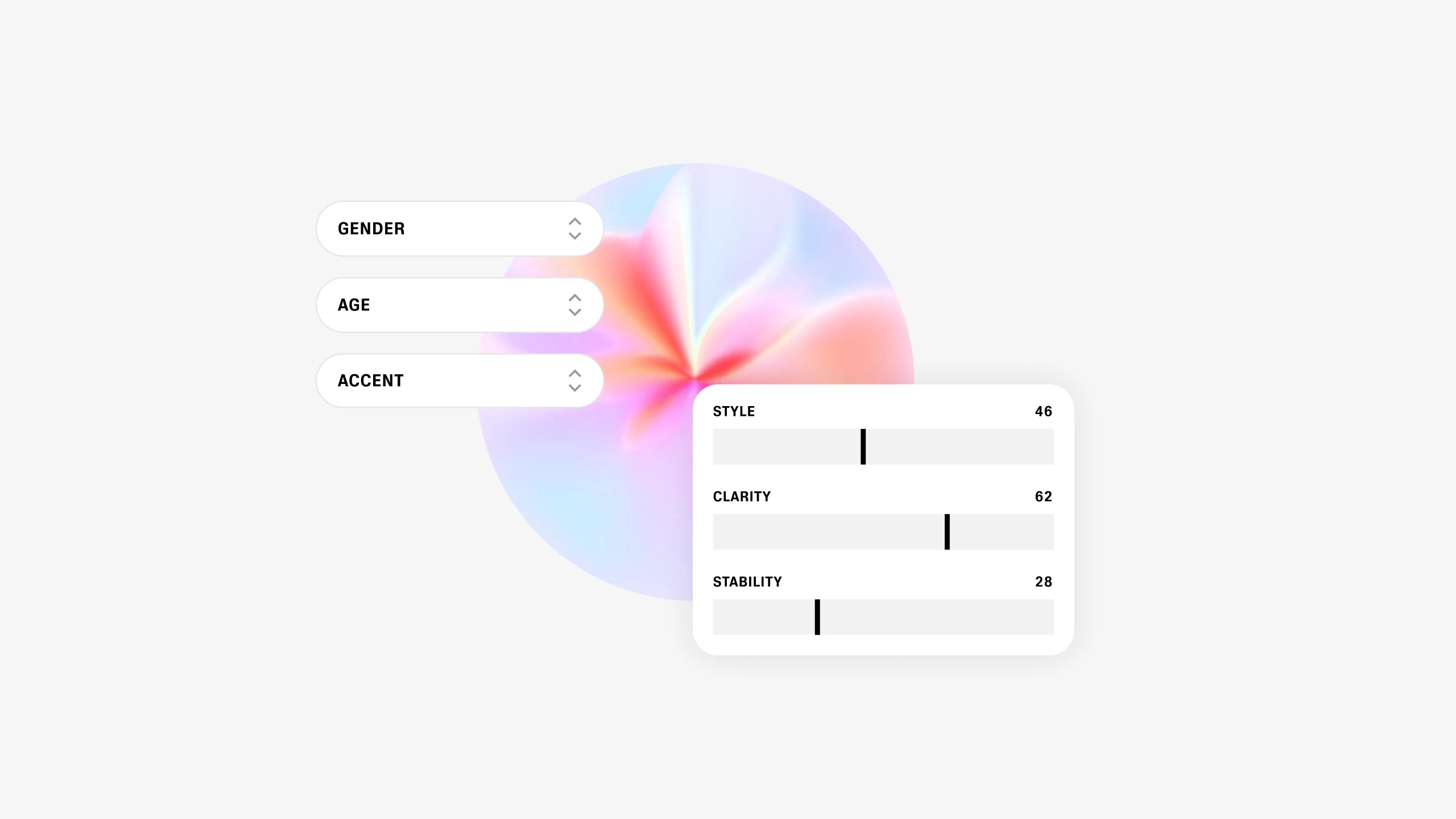
Controllable Parameters:
Users can set:
- 🧑 Gender
- 📅 Age
- 🌍 Accent
- 🎵 Pitch
- 🗣️ Speaking Style
Result:
Every time you generate — even with identical settings — you get a completely unique voice that has never existed before
Step 4: Real-World Applications
Who Benefits and How?
📚 Book Authors
└── Convert books to audio
└── Retain artistic control over narration style
└── Increase audiobook availability

📰 News Publishers
└── Create distinctive branded voices
└── Ensure voice exclusivity to their publication
└── Expand into audio journalism

🎮 Video Game Developers
└── Voice previously silent NPCs (Non-Player Characters)
└── Create unique voices for fictional worlds
└── Reduce production costs without sacrificing quality

📢 Advertisers
└── Design campaign-specific voiceovers
└── Experiment with multiple styles instantly
└── No need for additional recording resources

🏢 Corporate Communications
└── Consistent branded voice for company messaging
└── Scalable audio production
Step 5: Ethical Considerations
The Concerns:
- Job displacement — Will voice actors lose work?
- Misuse — Could voices be faked maliciously?
- Intellectual property — Who owns a synthetic voice?
The Proposed Solutions:
| Concern | Solution |
|---|---|
| Job displacement | Voice actors license their voices for fees |
| Misuse | Strict Terms of Service prohibiting harmful use |
| Traceability | Audio watermarking to trace generated content |
| IP Rights | Active support for voice owners claiming rights |
💡 Balanced Perspective:
Negative View:          Positive View:
AI replaces actors  VS  AI expands opportunities
                        ✓ More projects simultaneously
                        ✓ No physical presence required
                        ✓ Voice immortalization
                        ✓ Content becomes affordable
Step 6: Future Developments — Voice Enhancement
Coming Next: Combining Cloning + Generation
Your Real Voice
      ↓
   Clone It
      ↓
  Manipulate It
      ↓
Enhanced Output
Practical Use Cases:
- 😐 Monotone speaker? → Add natural variety
- 😰 Uncomfortable being recorded? → Make output sound more natural
- 🎤 Need professional audio? → Polish your voice at the click of a button
Summary: Key Concepts at a Glance
GENERATIVE VOICE AI
│
├── TECHNOLOGY
│   ├── Text-to-Speech (TTS)
│   ├── Voice Cloning
│   └── Speaker Embeddings (voice fingerprints)
│
├── INNOVATION
│   └── Generate infinite NEW voices
│       with controllable parameters
│
├── APPLICATIONS
│   ├── Audiobooks
│   ├── News Media
│   ├── Video Games
│   └── Advertising
│
└── ETHICS
    ├── Licensing models for voice actors
    ├── Watermarking for traceability
    └── IP protection measures
✅ Check Your Understanding
Test yourself with these questions:
- What is a speaker embedding and why is it important?
- How does voice generation differ from voice cloning?
- Name three industries that benefit from synthetic voice AI
- What ethical safeguards can be implemented in voice AI systems?
- Why might voice AI be considered underhyped compared to text or image AI?
🎯 Core Takeaway: Generative voice AI uses deep learning to create infinitely unique, controllable synthetic voices through speaker embeddings — opening vast opportunities across media, entertainment, and communication while requiring careful ethical frameworks to prevent misuse