Step-by-Step Study Material
Step 1: Understanding the Problem — Why Pandemic Preparedness Matters
The COVID-19 Advantage Was Unique
- Scientists responded quickly to COVID-19 because decades of prior coronavirus research already existed
- They understood key viral proteins well enough to design vaccines in record time
- ⚠️ Critical insight: The next pandemic may involve an unknown virus with no prior research foundation
The Statistical Reality
| Fact | Detail |
|---|---|
| Probability of another COVID-severity pandemic | ~50% by 2050 |
| Source | Center for Global Development |
| Core problem | We may have zero prior knowledge about the next virus |
Key Takeaway
"When the next pandemic happens, there may be something that comes out of the blue, and we'll be lacking the knowledge we had for COVID." — Professor Joe Grove
Step 2: Understanding Proteins — The Biological Foundation
What Are Proteins and Why Do They Matter?
Think of proteins as molecular machines that perform virtually every function in living organisms, including viruses.
Single Protein → Limited Function
Multiple Proteins Together (Complex) → Sophisticated Viral Functions
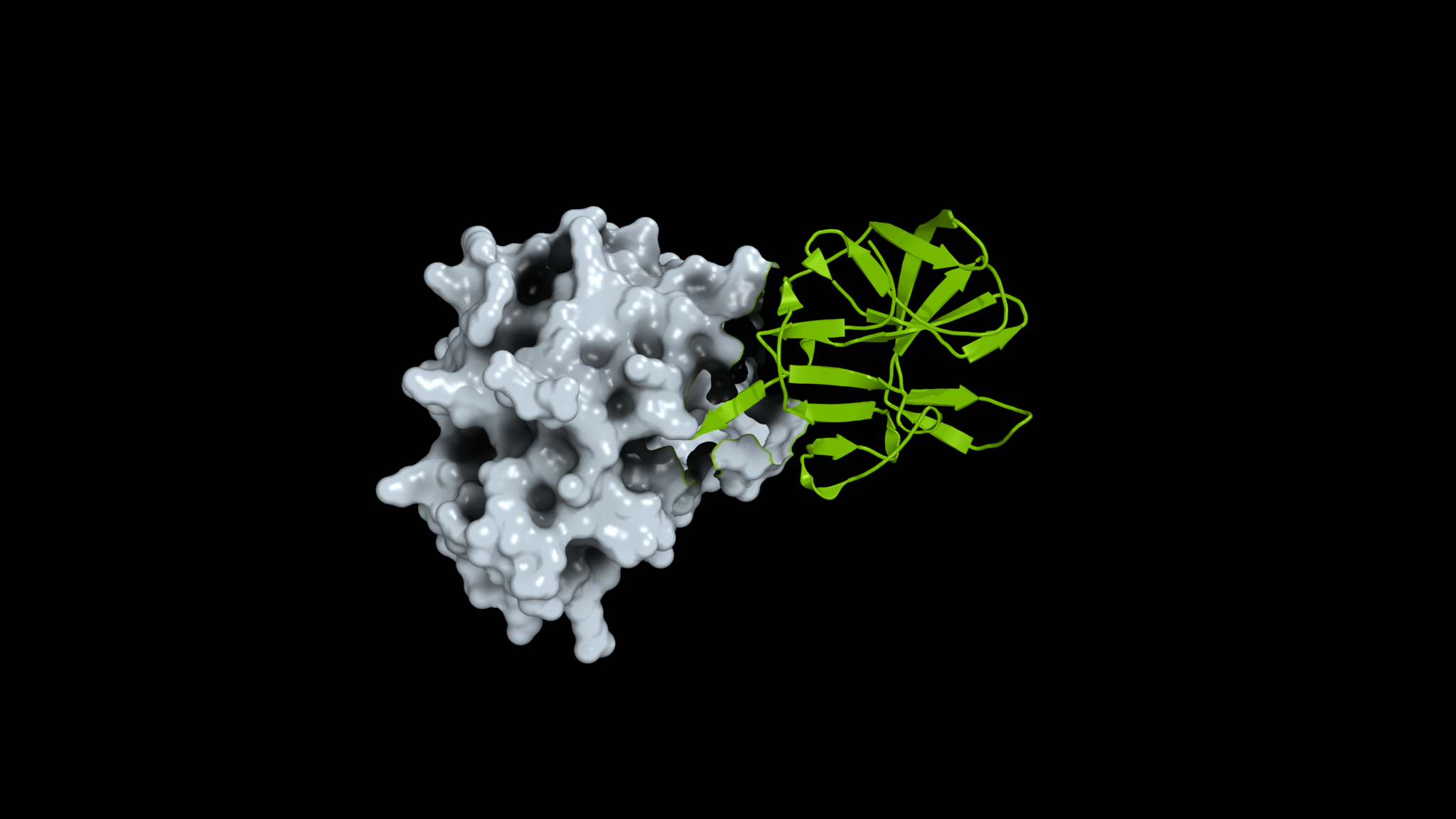
Protein Complexes Are Critical Drug/Vaccine Targets
- Most proteins do not work alone
- They combine into complexes (groups of interacting proteins)
- These complexes perform the functions that make viruses dangerous
- Vaccines and drugs must target these complexes to disrupt viral function
Real-World Example: COVID-19 Spike Protein
Spike Protein 3D Structure Discovered
          ↓
Scientists understood how virus attaches to human cells
          ↓
Vaccine designed to block that attachment
          ↓
Record-speed vaccine development
Key Takeaway
Understanding 3D protein structure = understanding how to fight the virus
Step 3: The Traditional Problem — Slow and Expensive Methods
How Protein Structures Were Traditionally Determined
Method: X-ray Crystallography
- Crystallize the protein (extremely difficult)
- Shoot X-rays at the crystal
- Analyze diffraction patterns
- Reconstruct 3D structure
The Limitations
| Factor | Traditional Method |
|---|---|
| Time per structure | Years |
| Cost per structure | Thousands of dollars |
| Scalability | Very limited |
| Coverage | Only well-funded, well-studied viruses |
The Repository Gap
- The Protein Data Bank stores experimentally determined structures
- Thousands of viruses that infect humans have no structural data whatsoever
- Lesser-studied viruses in low-resource regions are especially neglected
Step 4: The AI Solution — AlphaFold2 and Protein Structure Prediction
What is AlphaFold2?
- An AI model developed by Google DeepMind
- Predicts how proteins fold into 3D shapes from their amino acid sequence
- Represents one of the biggest scientific breakthroughs in decades
How It Works (Simplified)
Protein Sequence (letters/amino acids)
          ↓
AlphaFold2 AI Model
          ↓
Predicted 3D Structure (in minutes)
          ↓
Confidence Labels (how reliable the prediction is)
The Speed Comparison
| Method | Time Per Structure |
|---|---|
| X-ray Crystallography | Years |
| AlphaFold2 | Minutes |
Important Nuance
Predictions are labeled by confidence level — high-confidence predictions can then be verified through experimental methods, combining AI speed with scientific rigor
Step 5: Scaling Up — NVIDIA's Role in the Collaboration
The Challenge of Scale
- Predicting structures for one protein = manageable
- Predicting structures for 2,800+ viruses = enormous computational challenge
NVIDIA's Contribution
BioNeMo Inference Runtime optimized AlphaFold2 to:
- Run efficiently on NVIDIA GPUs
- Scale inference to thousands of viral proteomes
- Reduce prediction time dramatically
The Workflow
Viral Protein Sequence
        ↓
BioNeMo Structure Prediction Pipeline (GPU-accelerated)
        ↓
AlphaFold2 Prediction
        ↓
3D Structure of Protein Complex
        ↓
Added to AlphaFold Database
Additional Open Tool Released
- BioNeMo Structure Prediction Pipeline is openly released
- Any researcher can go from protein sequence → predicted 3D structure for their own targets
Step 6: The Dataset — What Was Actually Created
Scale of the Achievement
| Metric | Number |
|---|---|
| Viruses covered | 2,800+ |
| Total AlphaFold Database predictions | 260+ million |
| New protein interactions (never documented before) | ~30% of additions |
What "New to Science" Means
- 30% of protein interactions added show shapes never documented in the Protein Data Bank
- These are completely novel interaction patterns
- Opens entirely new avenues for biological research and hypothesis generation
Virus Families Covered
- Common cold viruses
- Emerging threats like Mpox
- All viral families known to infect humans
Step 7: Open Science — Why Accessibility Is Central
What "Open Science" Means Here
Making scientific data, tools, and methods freely available to any scientist, anywhere
Why Openness Matters for Pandemic Preparedness
Closed Science Model:
Rich institutions → Access to data → Research advantage
Poor/low-resource regions → No access → Research gap

Open Science Model:
ALL scientists globally → Equal access → Faster collective response
Specific Benefits of This Open Dataset
- Scientists in low-resource settings confronting outbreaks firsthand gain equal access
- Lesser-studied viruses (often in developing regions) are now covered
- AI and biology communities can build on the data together
- Hypothesis generation is democratized — any lab can investigate
The Database as an "Engine"
"This database is an engine for hypothesis generation... enabling biologists and the AI community to investigate protein interactions, not just as single molecules but as complexes." — Chris Dallago, NVIDIA
Step 8: The Global Collaboration Model
Organizations Involved
| Organization | Role/Expertise |
|---|---|
| Google DeepMind | AlphaFold2 AI model |
| NVIDIA | GPU acceleration, BioNeMo pipeline |
| EMBL-EBI | AlphaFold Database hosting |
| Coalition for Epidemic Preparedness Innovations | Pandemic preparedness strategy |
| Seoul National University | Research collaboration |
| Sungkyunkwan University | Research collaboration |
| Swiss Institute of Bioinformatics | Research collaboration |
| University of Glasgow | Virology expertise |
Why Collaboration Matters
- No single organization has all required expertise
- Combines AI capability + biological knowledge + computational infrastructure + global health strategy
- Aligned with UN-level pandemic preparedness discussions
Step 9: Synthesizing the Concept — The Full Picture
The Complete Logic Chain
PROBLEM:
Next pandemic may involve unknown virus
→ No prior structural knowledge
→ Slow vaccine/drug development
→ More deaths

TRADITIONAL SOLUTION (Insufficient):
X-ray crystallography
→ Too slow, too expensive, too limited

AI SOLUTION:
AlphaFold2 + GPU acceleration
→ Fast, scalable, affordable predictions

OPEN SCIENCE AMPLIFIER:
Free global access
→ Every scientist can contribute
→ Faster collective response

RESULT:
Pre-built knowledge stockpile
→ Head start on next pandemic
→ Faster vaccines and treatments
Step 10: Key Concepts Summary
Vocabulary Checklist
| Term | Definition |
|---|---|
| Protein complex | Group of interacting proteins working together |
| Proteome | Complete set of proteins encoded by a virus |
| AlphaFold2 | AI model predicting 3D protein structure from sequence |
| Protein Data Bank | Repository of experimentally determined protein structures |
| Open Science | Making scientific data/tools freely accessible globally |
| BioNeMo | NVIDIA's GPU-accelerated biology inference platform |
| Inference | Using a trained AI model to generate predictions on new data |
Self-Assessment Questions
-
Why was COVID-19 vaccine development faster than what we might expect for the next pandemic?
-
Explain why protein complexes (not just single proteins) are important targets for vaccines and drugs.
-
Compare traditional X-ray crystallography with AlphaFold2 prediction in terms of speed, cost, and scalability.
-
What does it mean that 30% of the new protein interactions are "new to science"?
-
Why is open access specifically important for pandemic preparedness, as opposed to keeping the data proprietary?
-
How does GPU acceleration connect to the goal of covering 2,800+ viruses?
Core Learning Outcome — Achieved ✓
You should now be able to explain how AI-powered protein structure prediction, combined with open science principles and global collaboration, creates a proactive knowledge stockpile that gives scientists a critical head start in responding to future pandemic threats.