Step-by-Step Study Guide
Step 1: Foundation — What Is the 6G Research Ecosystem?
Before understanding the applications, you need to understand the toolbox researchers are using.
Key Tools:
| Tool | Purpose |
|---|---|
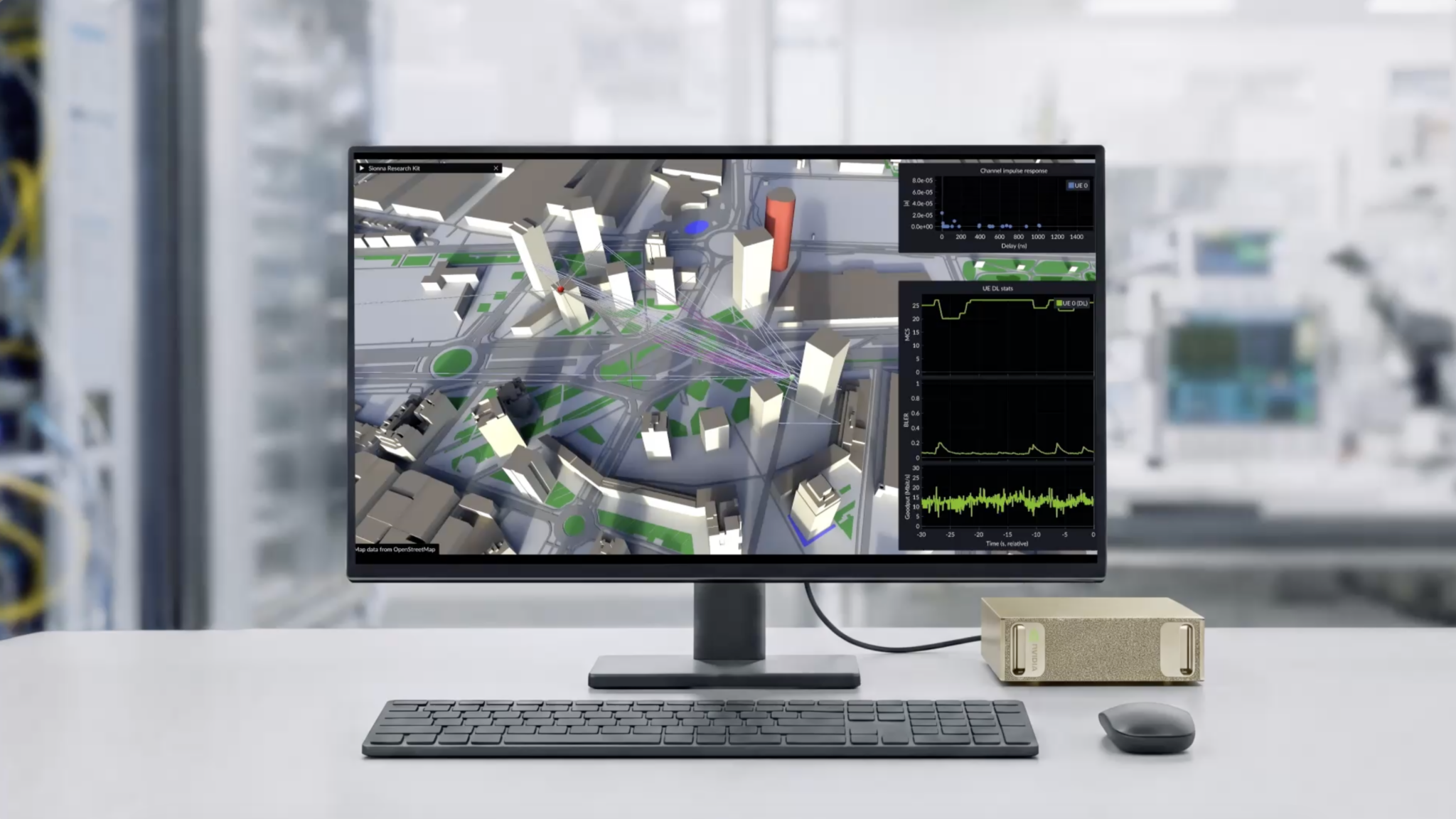
| NVIDIA Sionna | Software for simulating wireless channels + AI training |
| NVIDIA Aerial CUDA-Accelerated RAN (ACAR) | GPU-accelerated Radio Access Network software |
| NVIDIA Aerial Testbed | Real over-the-air wireless testing environment |
| NVIDIA DGX Spark | Compact AI computing hardware |
Why Open Source Matters:
Open Source Benefits:
├── Researchers can compare results fairly
├── Teams build on each other's work
├── Connects simulation → AI training → real experiments
└── 1M+ downloads | 8,000+ institutions worldwide
Key Concept: These tools bridge the gap between theoretical simulation and real-world wireless deployment — dramatically speeding up 6G innovation.
Step 2: Challenge #1 — Networks That Help Robots React Faster
The Problem:
When a robot's AI runs on a remote server or cloud, the wireless connection adds delay to every decision. In fast-moving environments (warehouses, factories), this delay matters.
Traditional Approach vs. New Approach:
TRADITIONAL:
Robot Camera → Sends FULL IMAGE → Server processes → Decision sent back
                    ↑
              High data volume = Slow response

NEW (Goal-Oriented Semantic Communications):
Robot Camera → Sends COMPACT DESCRIPTION (objects, positions, relationships)
                    ↑
              Less data = Faster response
Real-World Experiment (King's College London):
- Hardware: Camera robot arm + NVIDIA Jetson AGX Orin + NVIDIA Sionna
- Tasks: Fruit packing, cube stacking (with deliberate faults introduced)
- Results:
- ✅ 52.6% reduction in task completion time
- ✅ Better fault detection (dropped objects, failed actions)
- ✅ Digital twin integration checked for collision risks before movement
Key Takeaway:
Transmitting meaning instead of raw data makes robotic systems faster and more resilient over wireless networks.
Step 3: Challenge #2 — Networks That Learn to Receive Signals Better
The Problem:
Wireless signals face interference and changing radio conditions, causing errors and retransmissions. For time-critical users (firefighters, rescue teams), delayed information can have serious consequences.
The Solution — Neural (AI) Receivers:
CONVENTIONAL RECEIVER:
Incoming Signal → Fixed mathematical rules → Decoded data
                        ↑
                  Struggles with interference

NEURAL RECEIVER:
Incoming Signal → AI model (trained on real conditions) → Decoded data
                        ↑
                  Learns to recover information more effectively
Two Research Approaches:
Approach A — Better Reception in Interference (SoftBank + NVIDIA ACAR):
- Integrated neural receiver into a commercial 5G network
- Tested with a real 5G smartphone
- Result: Up to 60% higher uplink throughput vs. conventional receiver across all 15 test settings
Approach B — Location-Aware Tuning (ETH Zurich + NVIDIA Aerial Testbed):
- Tuned neural receivers using local real-world measurements
- Result: >33% reduction in block error rates vs. pretrained models
Key Takeaway:
AI receivers that learn from their environment outperform fixed-rule receivers, especially under difficult conditions.
Step 4: Challenge #3 — Networks That Learn When to Save Power
The Problem:
6G will connect billions of devices. Running base stations at full power all the time wastes enormous energy — especially when demand drops (e.g., after a stadium event ends).
The Solution — Predictive Power Management:
POWER MANAGEMENT WORKFLOW:
         ┌─────────────────────────────────┐
         │  AI predicts demand 10 min ahead │
         └──────────────┬──────────────────┘
                        ↓
         ┌─────────────────────────────────┐
         │  Check: Can neighbors cover      │
         │  devices if this station sleeps? │
         └──────────────┬──────────────────┘
                        ↓
              YES → Power down station
              NO  → Stay active
                        ↓
         ┌─────────────────────────────────┐
         │  Monitor for changes requiring  │
         │  capacity to be restored        │
         └─────────────────────────────────┘
Real-World Experiment (University of Leeds):
- Hardware: Portable 5G "network-in-a-box" powered by NVIDIA DGX Spark
- Validation: Digital twin tested decisions against real wireless equipment
- Result: 45.6% reduction in RAN power consumption while maintaining full device connectivity
Key Takeaway:
AI-driven sleep scheduling allows networks to dramatically cut energy use without dropping connections, by predicting demand and verifying coverage before powering down.
Step 5: Challenge #4 — Networks That Can Be Tested Faster
The Problem:
Before building a network, researchers must simulate how it performs under stress (hundreds of devices, interference, etc.). These simulations are computationally expensive:
Traditional Simulation Runtime: ~3 hours per scenario
                ↓
Limited number of designs can be tested
                ↓
Slower innovation cycle
The Solution — GPU-Accelerated Simulation:
CTTC's Approach:
- Integrated GPU-accelerated radio channel models (from NVIDIA ACAR) into the open-source 5G-LENA network simulator
- GPUs parallelize the complex math of how signals travel between antennas and devices
Results:
| Metric | Before | After |
|---|---|---|
| Simulation Runtime | ~3 hours | 10–20 minutes |
| Statistical Accuracy | Baseline | ✅ Preserved |
| Network Performance Accuracy | Baseline | ✅ Preserved |
Why This Matters:
Faster Simulation → More designs tested → Better networks deployed
     ↑
Same accuracy, fraction of the time
Key Takeaway:
GPU acceleration compresses the innovation cycle — researchers can explore more ideas, faster, without sacrificing accuracy.
Step 6: Connecting the Big Picture
Now that you understand each challenge, see how they fit together:
6G NETWORK VISION: AI-Native, Software-Defined, Converged Platform

    ROBOTS          SIGNAL          ENERGY          SIMULATION
  React Faster    Reception       Management        Speed
      │               │               │                │
  Semantic        Neural AI       Predictive       GPU-Accelerated
Communications   Receivers       Sleep Scheduling    Modeling
      │               │               │                │
      └───────────────┴───────────────┴────────────────┘
                              │
                    NVIDIA Open Source Tools
                  (Sionna, ACAR, Aerial Testbed)
                              │
                    Billions of connected
                  devices, machines & agents
Quick Review: Key Numbers to Remember
| Research Area | Institution | Key Result |
|---|---|---|
| Robot communications | King's College London | 52.6% faster task completion |
| Neural receiver (interference) | SoftBank | 60% throughput gain |
| Neural receiver (local tuning) | ETH Zurich | >33% fewer errors |
| Power management | University of Leeds | 45.6% energy reduction |
| Simulation speed | CTTC | 3 hours → 10–20 minutes |
Self-Check Questions
- What is goal-oriented semantic communication and why does it help robots?
- How does a neural receiver differ from a conventional receiver?
- What two conditions must be met before a base station can enter sleep mode?
- Why does faster simulation matter for 6G development?
- What role does a digital twin play in both the robotics and power management experiments?
Bonus: How do all four challenges connect to the broader goal of an AI-native 6G network?