How Automated Reasoning Proves Cloud and AI Systems Correct
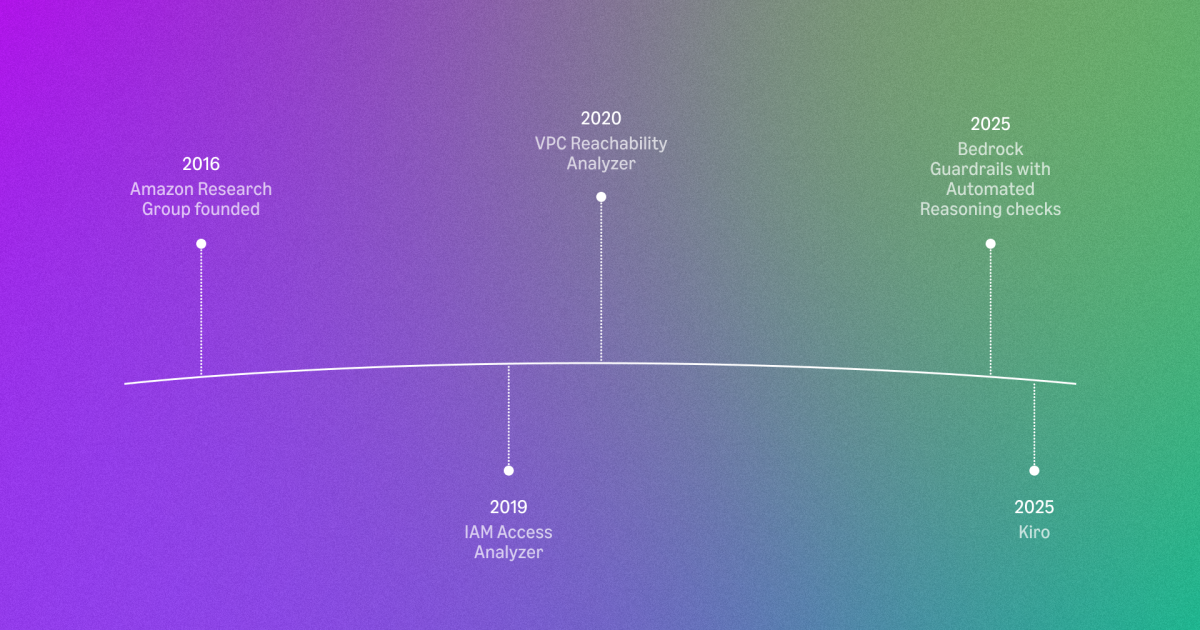
After studying this material, you should be able to:
- Define automated reasoning and formal verification
- Explain how mathematical proof differs from traditional software testing
- Identify core techniques used (SMT solvers, proof assistants, deductive verification)
- Recognize real-world applications across security, infrastructure, and AI
- Understand why mathematical guarantees matter at scale
Step-by-Step Study Material
Step 1: The Core Problem — Why Testing Alone Is Not Enough
Before understanding automated reasoning, you need to understand what problem it solves.
Traditional Testing
You write code → You test specific scenarios → You hope nothing breaks
The fundamental weakness:
Testing can only check the scenarios you think of
Example: Imagine a security policy with these variables:
- 1,000 possible users
- 1,000 possible resources
- 100 possible actions
That creates 100,000,000 combinations to test. Missing even one could mean a security breach.
The Automated Reasoning Alternative
You define HOW the system should work → Mathematics verifies ALL possible scenarios
Key insight from the article:
"Rather than considering all possible input scenarios and how they might go wrong, we define how the system should work and identify the necessary conditions for that behavior"
Step 2: What Is Formal Verification?
Formal verification is the process of using mathematical proof to confirm that a system behaves exactly as specified — under every possible condition.
Simple Analogy
| Approach | Real-World Equivalent |
|---|---|
| Traditional testing | Tasting a few cookies to check the recipe |
| Formal verification | Mathematically proving the recipe is correct before baking |
Three Key Components
1. SPECIFICATION  →  What should the system do?
2. PROOF          →  Mathematical confirmation it does exactly that
3. VERIFICATION   →  Automated checking of the proof
From the article: AWS proved their authorization engine was correct, then verified it against quadrillions of production authorizations — something no manual testing could achieve.
Step 3: Core Technique — SMT Solvers
The article mentions Satisfiability Modulo Theories (SMT) solvers as a foundational tool.
Breaking Down the Term
| Word | Meaning |
|---|---|
| Satisfiability | Can this logical statement be true? |
| Modulo Theories | Within specific mathematical rules (arithmetic, logic, etc.) |
| Solver | Automated tool that finds the answer |
How It Works — Simple Example
Suppose you have a security rule:
"User A can access Resource X ONLY IF they are in Group B AND it is business hours"
An SMT solver can automatically determine:
- Is this rule ever contradicted?
- Are there edge cases where access is granted incorrectly?
- Does this rule conflict with other rules?
It does this by converting your rules into mathematical logic and exhaustively checking all possibilities.
Step 4: Core Technique — Proof Assistants
Proof assistants are software tools that help humans construct and verify formal mathematical proofs.
The Process
Human writes specification
        ↓
Proof assistant checks every logical step
        ↓
If valid → Mathematical guarantee is issued
If invalid → Specific error is identified
Real Example from the Article
AWS used Lean (a proof assistant) to prove the correctness of the Nitro Confidentiality Engine — the security foundation of AWS's cloud hardware.
Why this matters:
A bug in this layer would affect every workload running on AWS. Mathematical proof eliminates that risk entirely.
Modern Enhancement
Proof Assistant + Language Model = Automated proof discovery for larger systems
The article notes this combination now allows finding proofs for systems that were previously too complex.
Step 5: Real-World Application #1 — Network Security (Tiros)
The Problem
As cloud networks grew, manually checking whether network configurations were secure became impossible.
Example scenario:
Company has:
- 500 servers
- 200 security groups
- 50 routing rules

Question: Can an unauthorized user reach Server #347?
Manual checking = impractical. Testing = incomplete.
The Solution: Tiros
Tiros converts your entire network configuration into a mathematical model, then proves reachability or non-reachability.
Network Configuration → Mathematical Model → Proof of Reachability
What it answers:
- Can destination X be reached from source Y? ✓ or ✗
- If not reachable, exactly which component is blocking it?
No packets are sent. No guessing. Pure mathematical analysis.
Products Built on Tiros
- Amazon Inspector — Security vulnerability analysis
- Reachability Analyzer — Network path verification
Step 6: Real-World Application #2 — Policy Verification (Zelkova)
The Problem
Cloud security policies written by humans contain errors. A single misconfigured policy can expose sensitive data publicly.
The Solution: Zelkova
Zelkova uses automated reasoning to:
1. Read your security policy
2. Convert it to formal logic
3. Mathematically determine what it ACTUALLY permits
4. Compare against what you INTENDED it to permit
5. Flag any discrepancy
Products Built on Zelkova
| Product | What It Verifies |
|---|---|
| IAM Access Analyzer | Who can actually access your AWS resources |
| S3 Block Public Access | Whether storage is truly private |
Key benefit: Instead of hoping your policy is correct, you receive mathematical proof of what it permits.
Step 7: Real-World Application #3 — AI Safety (Bedrock Guardrails)
The New Problem
AI language models can generate incorrect or policy-violating responses (hallucinations).
The Solution
Automated reasoning validates AI outputs against formal policies before they reach users.
AI generates response
        ↓
Formal logic checks response against defined policies
        ↓
Verified response delivered → OR → Response blocked/corrected
Result: Up to 99% verification accuracy in preventing policy violations.
Why This Matters for AI Agents
As AI agents act autonomously, they need boundaries. Automated reasoning provides:
- Mathematically defined action boundaries
- Real-time policy checking (milliseconds)
- Provable safety guarantees
Step 8: The Unexpected Benefit — Simplicity Through Rigor
This is a counterintuitive but important insight from the article.
The Discovery
Formal verification → Forces precise specification → Reveals simpler solutions
Why This Happens
When you must define your system with mathematical precision, you are forced to:
- Eliminate vague assumptions
- Identify redundant components
- Clarify contradictory requirements
Result: Systems become simpler, not just more correct.
"The discipline required for formal verification frequently reveals opportunities for simplification that might otherwise remain hidden"
Practical Implication
Mathematical rigor and practical engineering are not opposites — they reinforce each other.
Step 9: Connecting Everything — The Verification Hierarchy
Here is how all concepts connect across AWS infrastructure:
LAYER 1: Hardware
└── Nitro Isolation Engine (proven correct with proof assistants)

LAYER 2: Cryptography
└── s2n-bignum, TLS handshake (formally verified)

LAYER 3: Core Infrastructure
└── Authorization engine (1 billion API calls/second, mathematically verified)

LAYER 4: Network & Policy
└── Tiros (network reachability) + Zelkova (policy analysis)

LAYER 5: Customer Services
└── Inspector, Reachability Analyzer, IAM Access Analyzer, S3 Block Public Access

LAYER 6: AI Systems
└── Bedrock Guardrails, AgentCore Policy, Kiro requirements analysis
Each layer is mathematically guaranteed to behave correctly.
Step 10: Summary — Key Concepts Checklist
| Concept | Definition | Example |
|---|---|---|
| Formal Verification | Mathematical proof of system correctness | Proving Nitro Engine is secure |
| SMT Solver | Tool that checks logical satisfiability automatically | Checking policy contradictions |
| Proof Assistant | Software that verifies mathematical proofs | Lean proving cryptographic code |
| Specification | Precise mathematical definition of intended behavior | "Only Group B can access Resource X" |
| Reachability Analysis | Mathematically determining network connectivity | Tiros/Reachability Analyzer |
| Policy Verification | Proving what a policy actually permits | Zelkova/IAM Access Analyzer |
Final Thought — The Core Principle
Testing proves the presence of correctness in scenarios you imagined. Formal verification proves the absence of errors in all scenarios that exist.
This distinction is why automated reasoning has become foundational to securing systems that millions of people depend on daily.