Modular LLMs at scale: How the Danish Foundation Models project is using FlexOlmo to pool national expertise without pooling sensitive data | Ai2
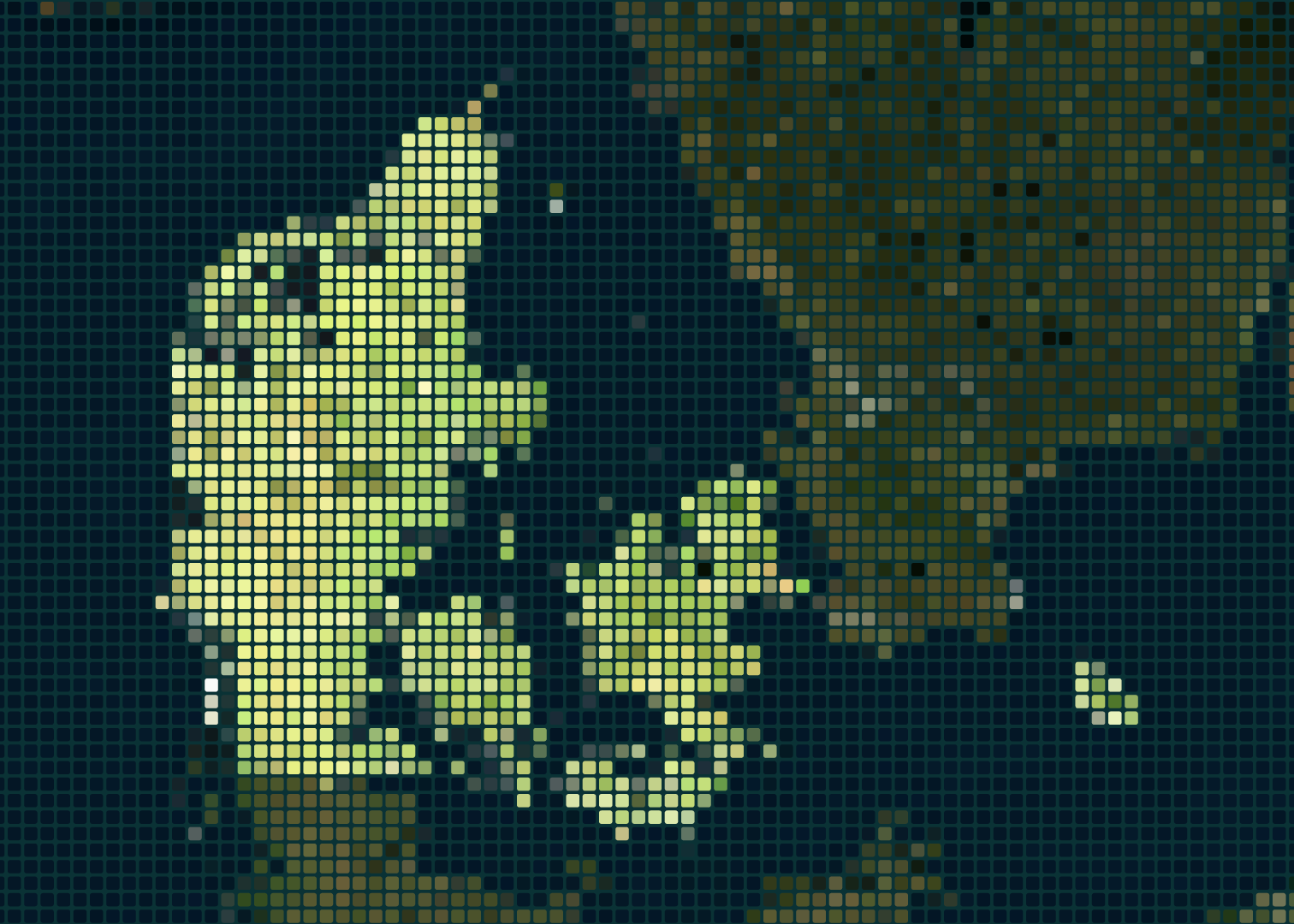
Concept 1: The Problem with Monolithic Language Models
What is a monolithic model?
A traditional large language model (LLM) is a single, unified system. Every piece of text you feed it gets processed by the entire model, every time.
Why is this a problem?
| Issue | Explanation |
|---|---|
| Data privacy | To improve the model, you'd need to pool everyone's data together |
| Size | One giant model is expensive to run |
| Centralization | Only well-resourced labs can build and maintain it |
Real-world example: A Danish hospital has valuable medical text data, but cannot legally share it due to GDPR. Under a monolithic approach, that data simply can't contribute to a shared model.
Concept 2: Mixture-of-Experts (MoE) — The Core Modular Idea
Instead of one big system, what if you had many specialists?
A Mixture-of-Experts (MoE) model breaks the model into multiple expert modules, each trained on different types of content.
Input Token → [Router] → selects relevant expert(s) → Output
                              ↓
                    [Legal Expert]
                    [Code Expert]
                    [Medical Expert]
                    [Math Expert]
Key insight: Only the selected experts run at any given time — not all of them.
Analogy: Instead of one doctor who knows everything, you have specialists. When you have a legal question, you consult the legal expert. When you have a coding problem, you consult the coding expert. You don't consult all of them every time.
Why this matters:
- Experts can be trained separately, on separate data
- Data never needs to leave its owner
- The combined model is more capable than any single expert alone
Concept 3: FlexOlmo — Modular Training Without Data Sharing
FlexOlmo is Ai2's framework that operationalizes the MoE idea for independent, distributed training.
How it works:
Team A trains Expert A on their private data  ──┐
Team B trains Expert B on their private data  ──┼──→ Merge into shared model
Team C trains Expert C on their private data  ──┘
- Each team trains their own expert in isolation
- No raw data is ever shared
- The experts are then merged into one combined model
The breakthrough: You can pool expertise without pooling sensitive data.
The limitation FlexOlmo had:
Each expert is the full size of a standalone model. Add more experts → model grows very large → requires expensive hardware to run.
Concept 4: Low-Rank Adapters — Making Experts Smaller
The core innovation in FlexMoRE
Instead of keeping every expert at full size, FlexMoRE replaces most experts with low-rank adapters (LoRA).
What is a low-rank adapter?
Think of it as a compressed summary of what a full expert learned, using far fewer parameters (the numbers that define the model's behavior).
Full Expert:     [████████████████████]  ← many parameters
Low-Rank Adapter: [████]                 ← far fewer parameters, similar behavior
The "rank" controls how much compression happens:
- Higher rank = larger adapter, more expressive
- Lower rank = smaller adapter, more compressed
The key finding: Not all tasks need the same rank.
| Task Type | Rank Needed | Why |
|---|---|---|
| Reasoning (e.g., multi-step math) | Higher | Needs to preserve complex logical structure |
| Knowledge retrieval (e.g., facts) | Lower | Facts compress well |
Analogy: A detailed engineering blueprint needs high resolution to be useful. A simple map of a city can be compressed more without losing what matters.
Concept 5: FlexMoRE — Scaling Modular Models to Consumer Hardware
FlexMoRE = FlexOlmo's architecture + low-rank adapters for most experts
What changes:
FlexOlmo:
[Full Expert] [Full Expert] [Full Expert] [Full Expert] [Full Expert]
     ↑              ↑              ↑              ↑              ↑
  Full size      Full size      Full size      Full size      Full size

FlexMoRE:
[Full Expert] [Small Adapter] [Small Adapter] [Small Adapter] [Full Expert]
     ↑                ↑               ↑               ↑              ↑
  Full size        Compressed     Compressed      Compressed     Full size
The result:
- Uses less than one-third the parameters of a full FlexOlmo model
- Outperforms the full-size baseline in testing
- Runs on consumer hardware (laptops, standard workstations)
Why this matters for the Danish project:
Hospitals, universities, and small companies can now download only the experts they need (e.g., Danish language + medical domain) and run the model on their own machines — no expensive cloud infrastructure required.
Concept 6: Federated / Distributed Training — The Bigger Picture
What FlexMoRE enables at a systems level
This approach is an example of federated learning — a paradigm where:
Institution A ──trains local expert──→ contributes module
Institution B ──trains local expert──→ contributes module   →  Shared model
Institution C ──trains local expert──→ contributes module
No raw data ever moves. Only the trained model weights (the expert modules) are shared.
Why this is significant:
| Traditional Approach | Modular/Federated Approach |
|---|---|
| Data must be centralized | Data stays local |
| One lab controls the model | Many institutions contribute |
| Expensive to run | Scalable to consumer hardware |
| Violates GDPR/privacy rules | Compliant by design |
Concept 7: Extending Modularity Beyond Pretraining (EMO & BAR)
The article introduces two more projects that push modularity into other stages of model development.
Stage 1: Pretraining (what FlexOlmo/FlexMoRE address)
Training the model on raw text data to learn language and knowledge.
Problem FlexOlmo had: Expert specializations had to be defined in advance. EMO's solution: Let experts discover their own specializations during training.
FlexOlmo: You decide → "This expert handles legal text"
EMO:      Model decides → experts self-organize around topics naturally
Stage 2: Post-training (what BAR addresses)
After pretraining, models are further trained to:
- Follow instructions
- Reason through problems
- Use tools
- Refuse unsafe requests
Problem: In a standard pipeline, all these behaviors get tangled together — improving one often breaks another.
BAR's solution: Give each capability its own isolated post-training pipeline.
Standard:  [Base Model] → one big post-training → all behaviors mixed together

BAR:       [Base Model] → [Instruction pipeline]
                        → [Reasoning pipeline]
                        → [Safety pipeline]
                        → [Tool-use pipeline]
           Each runs in isolation, then combined
Summary: The Full Conceptual Arc
PROBLEM: Monolithic models require centralized data and expensive hardware

SOLUTION LAYER 1 — MoE Architecture:
  Route tokens to specialized experts instead of one big model

SOLUTION LAYER 2 — FlexOlmo:
  Train experts independently, merge without sharing data

SOLUTION LAYER 3 — FlexMoRE:
  Replace most experts with low-rank adapters → smaller, faster, accessible

SOLUTION LAYER 4 — EMO:
  Remove the need to pre-define expert specializations

SOLUTION LAYER 5 — BAR:
  Extend modularity into post-training stages

OUTCOME: Powerful AI built collaboratively, openly, without centralizing
         sensitive data or requiring expensive infrastructure
The unifying principle across all these concepts:
Powerful models don't have to be monolithic or centralized. Modularity allows expertise to be pooled without pooling the sensitive data underneath — making AI development more open, more private, and more accessible.