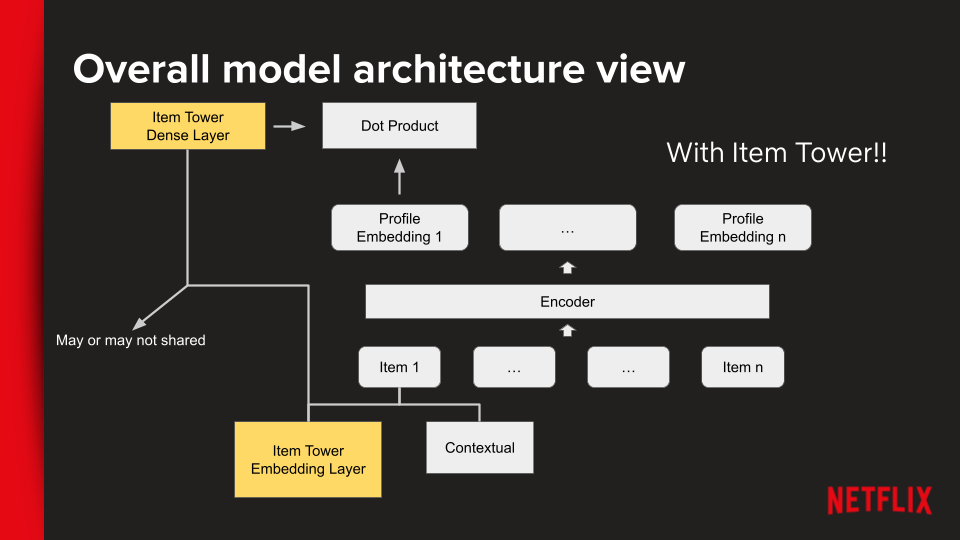
Step-by-Step Teaching
Step 1: Understanding the Problem (The "Why")
Why does Netflix need a Foundation Model?
BEFORE Foundation Model:
┌─────────────┐  ┌─────────────┐  ┌─────────────┐
│  Model A    │  │  Model B    │  │  Model C    │
│ (Trending)  │  │ (Similar)   │  │ (Continue)  │
│             │  │             │  │             │
│ Learns      │  │ Learns      │  │ Learns      │
│ preferences │  │ preferences │  │ preferences │
│ separately  │  │ separately  │  │ separately  │
└─────────────┘  └─────────────┘  └─────────────┘
     ❌ Redundant work, high maintenance cost

AFTER Foundation Model:
         ┌──────────────────────┐
         │   Foundation Model   │
         │  (Central Learning)  │
         │  User histories +    │
         │  Content data        │
         └──────────┬───────────┘
                    │ Distributes learnings
         ┌──────────┼───────────┐
         ▼          ▼           ▼
    Model A      Model B     Model C
    ✅ Efficient, consistent, powerful
Key Concept:
The Foundation Model acts like a shared brain — trained once on massive data, then its knowledge is distributed to specialized models
Step 2: The Three Integration Approaches Overview
Foundation Model Integration Options
├── 1. Embeddings    → Pre-computed representations stored & reused
├── 2. Subgraph      → Foundation Model runs inside application model
└── 3. Fine-tuning   → Customize Foundation Model for specific tasks
Think of it like using a powerful encyclopedia:
- Embeddings = Reading the summary pages (fast, but possibly outdated)
- Subgraph = Consulting the full encyclopedia in real-time (thorough, but slower)
- Fine-tuning = Creating a specialized edition of the encyclopedia (tailored, but more to maintain)
Step 3: Deep Dive — Approach 1: Embeddings
What is an Embedding?
An embedding is a numerical representation (vector) that captures the meaning/preferences of a user or item
User Interaction History → Foundation Model → User Profile Embedding
                                           → Item Embeddings

Example:
User watches: [Action Movie, Thriller, Documentary]
                        ↓
Foundation Model processes sequence
                        ↓
User Embedding: [0.82, 0.15, 0.67, ...] (dense vector)
How Netflix Refreshes Embeddings
Monthly Cycle:
┌─────────────────────────────────────────────┐
│  Pre-train Foundation Model from scratch    │
│  (Full retraining on all data)              │
└─────────────────────┬───────────────────────┘
                      │
Daily Cycle:          ▼
┌─────────────────────────────────────────────┐
│  Fine-tune on latest data                   │
│  + Add newly launching titles               │
└─────────────────────┬───────────────────────┘
                      │
                      ▼
┌─────────────────────────────────────────────┐
│  Run Batch Inference                        │
│  Generate fresh embeddings                  │
└─────────────────────┬───────────────────────┘
                      │
                      ▼
┌─────────────────────────────────────────────┐
│  Publish to Embedding Store                 │
│  (Versioned + Timestamped)                  │
└─────────────────────────────────────────────┘
Critical Problem: Embedding Drift
Month 1 Training:          Month 2 Training:
"Action" → [0.9, 0.1]     "Action" → [0.2, 0.8]
                ↑
         Random initialization causes
         completely different spaces!

Solution: Embedding Stabilization Technique
→ Maps all embeddings into the SAME space
→ Downstream models can reliably consume them
Embedding Store — The Infrastructure Backbone
Embedding Store Functions:
├── Versioning (tracks which model generated embeddings)
├── Timestamping (knows when embeddings were created)
├── Offline access (for model training)
└── Online access (for real-time serving)
Pros and Cons Summary
| ✅ Pros | ❌ Cons |
|---|---|
| Low barrier to entry | Staleness (daily refresh gap) |
| Low compute cost | May miss real-time signals |
| Easy to integrate | Not full Foundation Model power |
| Good starting point | Less adaptive to session behavior |
When to Use:
Use embeddings as your default starting point when freshness requirements are flexible and you want low cost, high leverage
Step 4: Deep Dive — Approach 2: Subgraph
What is the Subgraph Approach?
Traditional Application Model:
┌────────────────────────────────┐
│     Application Model          │
│  [Features] → [Layers] → Output│
└────────────────────────────────┘

Subgraph Integration:
┌────────────────────────────────────────────┐
│           Application Model                │
│                                            │
│  ┌──────────────────────┐                  │
│  │  Foundation Model    │ ← Subgraph       │
│  │  (Decoder Stack)     │                  │
│  │  Processes raw user  │                  │
│  │  interaction sequence│                  │
│  └──────────┬───────────┘                  │
│             │ Representations              │
│             ▼                              │
│  [Application-specific layers] → Output   │
└────────────────────────────────────────────┘
Key Optimization: Run Once, Share Everywhere
Without optimization:
Request for User X with 10 items:
Foundation Model runs 10 times ❌ (expensive!)

With optimization:
Foundation Model runs ONCE per user profile
         ↓
Result shared across all 10 items ✅
Pros and Cons Summary
| ✅ Pros | ❌ Cons |
|---|---|
| No staleness (real-time) | Larger model size |
| Access to all FM layers | Slower inference |
| Can fine-tune FM jointly | Complex feature generation |
| Full Foundation Model power | Higher compute cost |
When to Use:
Reserve for high-impact use cases where metric improvements justify the added complexity and cost
Step 5: Deep Dive — Approach 3: Fine-Tuning
What is Fine-Tuning?
Foundation Model (General Knowledge)
Pre-trained on: next-token prediction
Tokens = different user interactions

         ↓ Fine-tuning

Application-Specific Model
Trained on: specific surface data
Example: "Trending Now" row
→ Weights recent interactions on trending titles MORE
Fine-Tuning Options Available
Fine-Tuning Choices:
├── Full Parameter Fine-tuning
│   └── Update ALL weights (maximum customization)
│
├── Frozen Layers Fine-tuning
│   └── Keep some layers fixed (faster, cheaper)
│
└── Custom Output Head
    └── Add new objective layer (task-specific)
Practical Example
Foundation Model trained on:
[Watch, Search, Rate, Browse, ...] → Next interaction prediction

Fine-tuned for "Trending Now":
[Recent trending watches] → Trending score prediction
↑
Different objective, different data emphasis
Pros and Cons Summary
| ✅ Pros | ❌ Cons |
|---|---|
| Optimized for specific use case | More models to maintain |
| Built-in baseline for new apps | Latency must be carefully managed |
| No months of feature engineering | SLA optimization required |
| Adapts FM to specific objectives | Organization-wide pipeline complexity |
When to Use:
Use when you need task-specific optimization and want to avoid building a new model stack from scratch
Step 6: Comparing All Three Approaches
Decision Framework:

START
  │
  ▼
Do you need real-time adaptability?
  │
  ├── NO → Start with EMBEDDINGS
  │         (Low cost, easy integration)
  │
  └── YES
        │
        ▼
      Do you need full FM power with
      joint training?
        │
        ├── YES, high impact use case → SUBGRAPH
        │   (Accept complexity for performance)
        │
        └── Need task-specific optimization → FINE-TUNING
            (Custom objective, new surface)
Side-by-Side Comparison Table
| Dimension | Embeddings | Subgraph | Fine-Tuning |
|---|---|---|---|
| Freshness | Daily (stale) | Real-time | Depends on retraining |
| Compute Cost | Low | High | Medium-High |
| Integration Complexity | Low | High | Medium |
| FM Power Utilized | Partial | Full | Full (specialized) |
| Maintenance Burden | Low | Medium | High |
| Best For | Starting point | High-impact features | New surfaces/tasks |
Step 7: Future Directions
Netflix is actively improving all three approaches:
Current Limitations → Solutions in Progress

Embeddings staleness → Near-real-time embedding inference
                       (Updates during user session!)

Subgraph latency    → Distilled (smaller) Foundation Model
                       (Same knowledge, faster inference)

Fine-tuning effort  → Standardized fine-tuning framework
                       (Easier for application teams)
Summary: The Big Picture
Netflix Foundation Model Integration — Mental Model

                    Foundation Model
                   (Central Knowledge)
                          │
          ┌───────────────┼───────────────┐
          ▼               ▼               ▼
    EMBEDDINGS        SUBGRAPH       FINE-TUNING

    "Pre-read         "Live          "Specialized
     summary"         consultation"  edition"

    Fast & cheap      Powerful &     Task-optimized
    Slightly stale    Real-time      Custom objective

    → Start here      → Scale up     → New surfaces
Core Takeaway:
There is no single best approach — the right integration depends on your latency requirements, compute budget, freshness needs, and impact potential. Netflix uses all three in production simultaneously for different use cases.