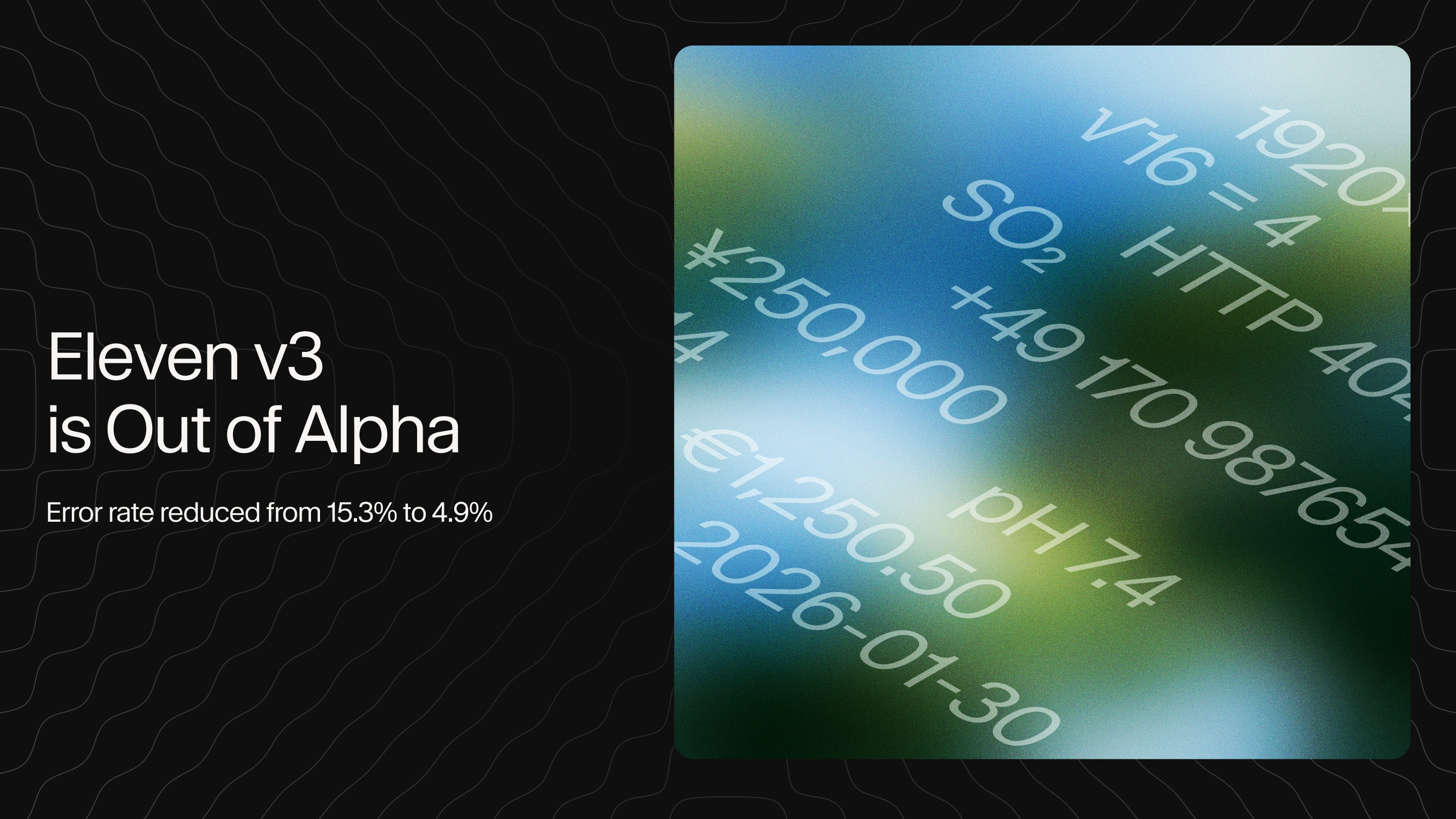
Concept 1: What is Text to Speech (TTS)?
Text to Speech (TTS) is technology that converts written text into spoken audio.
Think of it like this:
Written Input → [TTS Model] → Spoken Audio Output
"Hello world"  →   [Model]  → 🔊 "Hello world"
Key idea: The model doesn't just "read" — it must interpret what it reads and decide how to say it.
Concept 2: The Core Challenge — Interpretation
This is where it gets interesting. The same symbol can mean completely different things depending on context.
Consider the colon symbol ::
| Text | Context | Correct Reading |
|---|---|---|
3:45 | Time | "three forty-five" |
102:98 | Sports score | "one hundred two to ninety-eight" |
16:9 | Aspect ratio | "sixteen to nine" |
Key idea: The model must read surrounding context to decide the correct interpretation — just like a human reader would.
Concept 3: Common Interpretation Errors
Before improvements, TTS models made predictable mistakes by applying literal or default rules instead of context-aware ones.
Example 1 — Phone Numbers
Input:  +49 170 9876543

❌ Before: "plus forty-nine, one hundred seventy,
            nine million eight hundred seventy-six
            thousand five hundred forty-three"

✅ After:  "plus four nine, one seven zero,
            nine eight seven six five four three"
The mistake: Treating digit groups as large numbers instead of individual digits.
Example 2 — Currency
Input:  ¥250,000

❌ Before: "25,000 yen"   ← dropped a zero!
✅ After:  "250,000 yen"  ← correct magnitude
The mistake: Misreading the comma separator, causing a 10x magnitude error.
Example 3 — Chemical Formulas
Input:  SO₂

❌ Before: "sulfur double"  ← garbled/nonsensical
✅ After:  "S O two"        ← symbols preserved correctly
The mistake: Failing to recognize specialized scientific notation.
Example 4 — Sports Scores
Input:  Final score: 102-98

❌ Before: "one hundred two minus ninety-eight"  ← math interpretation
✅ After:  "one hundred two to ninety-eight"     ← score interpretation
The mistake: Treating - as a subtraction operator instead of a score separator.
Concept 4: How Improvement is Measured — Benchmarking
To track progress, you need a benchmark — a standardized test with known correct answers.
Benchmark Structure (Eleven's internal test):
├── 27 categories (currencies, scores, formulas, coordinates...)
├── 8 languages
└── Metric: Error Rate (% of outputs that are wrong)
The Results:
| Version | Error Rate |
|---|---|
| Before (Alpha) | 15.3% |
| After (v3) | 4.9% |
| Improvement | 68% reduction |
Key idea: A 68% reduction in errors means roughly 2 out of 3 previous mistakes are now fixed.
Concept 5: Why Context-Dependent Categories Improve Most
The biggest gains came in categories where context determines meaning — not fixed rules.
Fixed rule (easy):    $ always = "dollars"
Context-dependent:    - could mean minus, to, through,
                        hyphen, or score separator
Models that learn to read surrounding words and symbols handle ambiguous cases far better than models applying rigid rules.
Summary — The Full Picture
PROBLEM:  Same symbols → different meanings depending on context
          Models defaulted to literal/mathematical interpretations

SOLUTION: Train models to use surrounding context as clues
          Test across many categories and languages

RESULT:   Error rate: 15.3% → 4.9% (68% improvement)
          Users preferred new version 72% of the time
The core lesson: Good TTS isn't just about pronunciation — it's about understanding context to interpret text the way a human reader naturally would. 🎯