After studying this material, you should be able to:
- Explain what scattering amplitudes are and why physicists calculate them
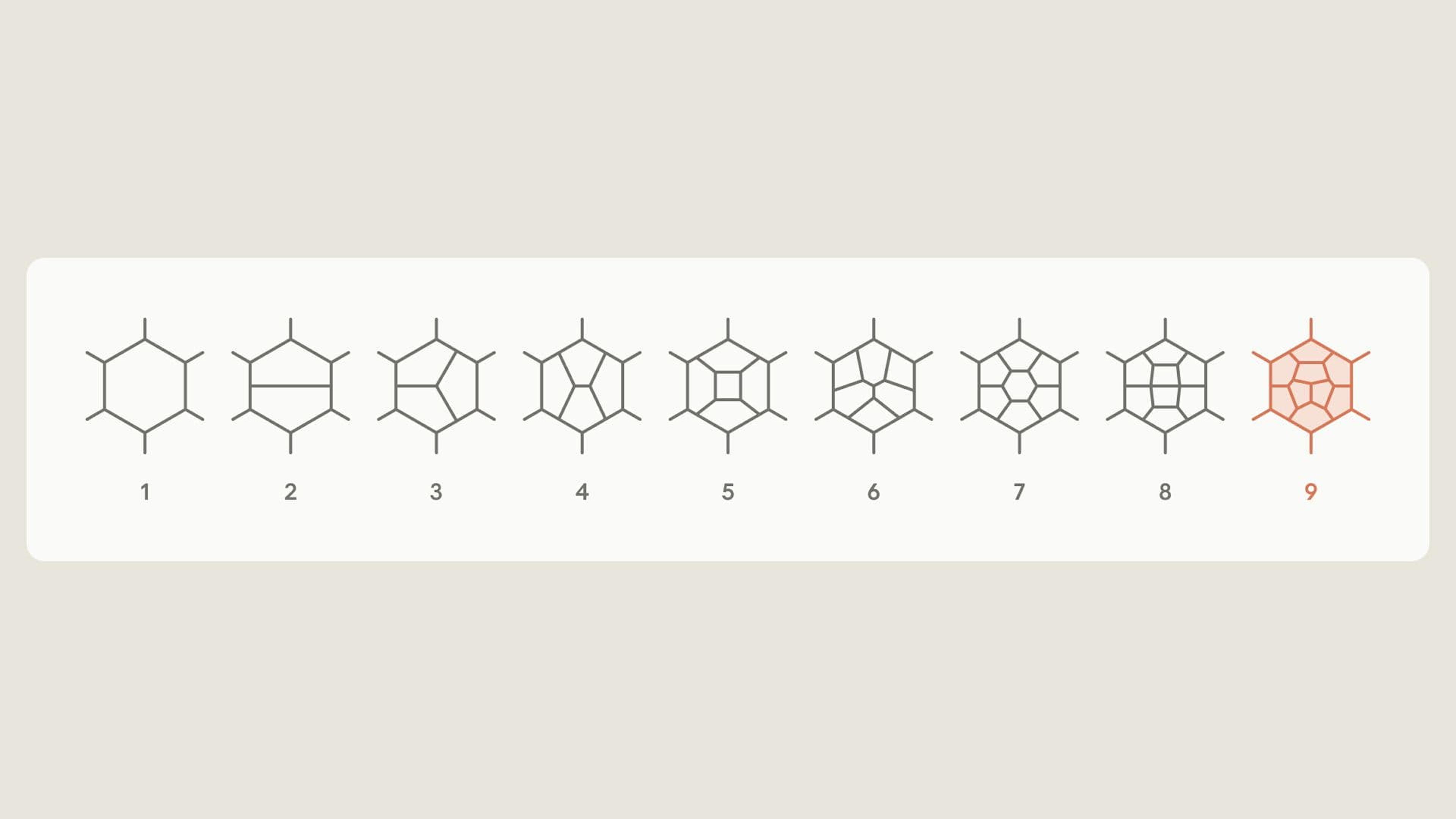
- Describe what "loops" mean in particle physics calculations and why they matter
- Understand what N=4 super Yang-Mills theory is and why physicists use it
- Explain the bootstrap method for computing amplitudes
- Evaluate what Claude's nine-loop calculation demonstrates about AI capabilities in scientific research
Step-by-Step Study Material
Step 1: Why Physicists Need Scattering Amplitudes
The Core Problem
When subatomic particles collide, physicists need to predict the probability of specific outcomes. For example:
- Will two protons produce a Higgs boson?
- How likely is a particular decay pattern?
The Tool: Scattering Amplitudes
A scattering amplitude is a mathematical formula that takes as inputs:
- Particle momenta (how fast they move)
- Particle energies
And outputs:
- Probability of a specific interaction occurring
Why This Matters Practically
Experiment (LHC) → measures actual outcomes
         ↕ compare
Theory → scattering amplitudes predict outcomes

Mismatch = possible new physics (dark matter, matter/antimatter imbalance)
Key Takeaway
More accurate amplitude calculations = better ability to detect new physics
Step 2: Understanding "Loops" — The Complexity Ladder
What Is a Loop?
Quantum mechanics says particles can interact through virtual intermediate states — temporary particle-antiparticle pairs that pop in and out of existence. Each additional "loop" accounts for more complex intermediate interactions.
A Simple Analogy
Think of calculating the cost of a road trip:
| Approximation Level | What You Include |
|---|---|
| Zero loops (tree level) | Just fuel cost |
| One loop | Fuel + one possible detour |
| Two loops | Fuel + two possible detours |
| Nine loops | Fuel + nine layers of possible detours |
Each additional loop gets exponentially harder to calculate but gives a more accurate answer.
Real-World Context
| Loops | Difficulty | Who Has Done It |
|---|---|---|
| 1-2 | Manageable | Most physicists |
| 3 | Hard | Specialists |
| 5 | Very hard | Most precise prediction in particle physics |
| 8 | Extreme | Lance Dixon's team (2023) |
| 9 | Frontier | Claude (2025) |
Step 3: What Is N=4 Super Yang-Mills?
Building Up the Name
Yang-Mills Theory (the foundation):
- A mathematical framework describing forces
- Three of four fundamental forces are Yang-Mills theories:
- Electromagnetism
- Strong nuclear force (holds atomic nuclei together)
- Weak nuclear force (causes radioactive decay)
Supersymmetry (the "super" part):
- A theoretical idea proposing every particle has a supersymmetric partner
- Partners have the same charge but different type
- Example: electrons (matter) ↔ photinos (force)
N=4 (the specific version):
- Each particle has four supersymmetric partners
- This is unrealistic for the real world
- But paradoxically easier to calculate with
Why Use an Unrealistic Theory?
Real-world theories:          N=4 super Yang-Mills:
- Messy calculations          - Streamlined calculations
- Hard to isolate errors      - Easier to test methods
- Computationally expensive   - More affordable
        ↓                              ↓
  Hard to develop               Perfect testing ground
  new techniques                for new techniques
Analogy: Surgeons practice on simulated patients before real ones. N=4 is the simulator for amplitude techniques.
Step 4: The Bootstrap Method — How Amplitudes Are Actually Computed
The Core Idea
Instead of calculating every possible particle interaction from scratch, the bootstrap method works backward from constraints.
Step-by-Step Bootstrap Process
Step 1: Define the "alphabet"
- Write down every possible mathematical building block the answer could contain
- Store these in computer files
- At nine loops, this is an enormous list
Step 2: Apply known constraints Cross out possibilities that violate known rules:
- Predictions from other calculation techniques
- Mathematical symmetry requirements
- Links to related, easier problems
Step 3: Check until one answer remains Keep eliminating until only one possibility satisfies ALL constraints
The Sudoku Analogy (from the article)
Sudoku:                    Bootstrap:
Start with all numbers  =  Start with all possible terms
Apply row/column rules  =  Apply physics constraints
Cross out violations    =  Eliminate invalid terms
One solution remains    =  One valid amplitude remains
Extra checks confirm    =  Leftover checks verify result
Why Bootstrap Is AI-Friendly
- It is systematic and rule-based
- Progress is checkable at each step
- It requires computational endurance, not creative leaps
- Results can be verified independently
Step 5: What Claude Actually Did
The Setup
- Tool used: Claude Science (a structured AI harness)
- Model: Claude (Fable 5.1)
- Prompt given: "Compute the six-particle hexagon amplitude in planar N=4 SYM at nine loops"
- Human oversight: Minimal ("keep going, I'm going to sleep")
Two Approaches Claude Used
| Approach | Method | Cost |
|---|---|---|
| Direct bootstrap | Python + SymPy | ~$100 |
| Indirect form-factor | Via related easier quantity | ~$1,000-2,000 total |
The Computational Resources
- 96 CPUs running for one week
- Cost: approximately $100-200
- This is affordable for most research institutions today
Why This Was Hard (Even for Experts)
According to Lance Dixon:
"The whole setup is very fragile: if you make any mistake at all in the computational recipe, it all crashes down like a failed soufflé"
Claude had to:
- Reconstruct undocumented computational details
- Write all code from scratch
- Maintain consistency across a week-long calculation
- Self-correct errors without human intervention
Step 6: What This Result Means — Three Levels of Significance
Level 1: For Amplitudeology (the specific field)
- Nine-loop amplitude is now known
- Validates the bootstrap technique at a new frontier
- Provides data worth studying independently
- Confirms previous work by Dixon's team
Level 2: For AI in Science
| Old assumption | New evidence |
|---|---|
| AI needs massive compute to beat experts | $100-200 of compute was sufficient |
| AI requires constant human oversight | One-shot with minimal supervision |
| Frontier problems need human creativity | Known methods + better software engineering worked |
| Experts know where the computational limits are | Experts underestimated what was achievable |
Level 3: For the Broader AI Debate
The author's honest assessment:
- Claude used known methods, not new ones
- It may have benefited from better software engineering than typical physicists use
- The result suggests more low-hanging fruit exists than experts assumed
- It does not resolve debates about superintelligence or truly novel AI reasoning
Step 7: Critical Evaluation — What This Does and Doesn't Show
What It DOES Show ✓
- AI can execute long, complex, multi-step calculations reliably
- AI can work autonomously on frontier scientific problems
- Computational barriers are sometimes psychological, not real
- AI has improved significantly (from "student-level" in March to "frontier expert-level" by September)
What It DOES NOT Show ✗
- AI inventing new mathematical methods
- AI making conceptual breakthroughs
- AI solving problems where the method itself is unknown
- Evidence for or against superintelligence
The Author's Key Insight
"My biggest takeaway is that there is more low-hanging fruit out there than you'd expect. Even when a goal is simple and well-defined, sometimes it's going to look much less achievable to experts than it actually is."
Summary: The Complete Picture
PARTICLE PHYSICS NEED
        ↓
Accurate predictions require scattering amplitudes
        ↓
More loops = more accuracy = harder computation
        ↓
N=4 super Yang-Mills = safe testing ground for methods
        ↓
Bootstrap method = systematic constraint elimination
        ↓
Nine loops = frontier no human had directly computed
        ↓
Claude + $100-200 + one week = nine-loop result
        ↓
LESSON: Computational barriers are often lower than experts assume
        AI can now reliably execute frontier scientific calculations
Self-Check Questions
- Why do physicists use N=4 super Yang-Mills instead of real-world theories for testing methods?
- What does "nine loops" mean, and why is it harder than eight loops?
- How does the bootstrap method work? What is the Sudoku analogy?
- What made Claude's calculation impressive from an engineering standpoint?
- What did this result not demonstrate about AI capabilities?
- Why does the author say he "was too naïve about where the limit was"?